Quick Summary
The future of GCCs belongs to organizations that embed learning into delivery; developing technical expertise, consulting capability, AI readiness, and leadership that scales with the business.
Key Takeaways
- The real skills gap in GCCs isn't technical, it's the ability to think critically, solve ambiguity, and build client trust.
- Learning should be embedded into delivery, not confined to training programs, enabling continuous capability development.
- Future-ready GCCs are built by organizations that learn faster than technology changes, creating lasting competitive advantage
People ask me what I've learned from building Learning & Development at BOT, I usually tell them that curiosity has been my greatest qualification.
It certainly wasn't because I knew everything.
In fact, I joined a consulting company knowing far less than I was comfortable admitting. I didn't know every cloud platform. I hadn't spent years leading Global Capability Centers. I certainly didn't walk in with all the answers.
So I started asking questions.
I sat with GCC leaders. I curiously listened to consultants. I attended client conversations. I spoke with delivery managers, engineers, founders, and new joiners.
Slowly, patterns started to emerge.
Curiosity has an interesting habit of making you ask better questions. Better questions lead to better conversations. Better conversations lead to better ideas. Better ideas build better people. And better people build better organizations.
That's probably the biggest lesson this journey has taught me: learning isn't about creating more courses. It's about creating an environment where people never stop learning from one another.
The Real Skills Gap Isn't Technical
The hardest person to find for a GCC role right now isn't an AI engineer. It's someone who can walk into a client meeting, hear a half-formed problem, create structure where none exists, and leave the conversation with trust already beginning to form.
That capability rarely appears on a résumé. And it certainly isn't built through a two-week onboarding deck.
Every conversation around GCC talent eventually comes back to hiring: How quickly can we build a team? How fast can we staff a pod? But they're not the questions that decide whether a GCC actually works for a client five years in, 8000 miles away. The shortage we're up against isn't people.
Why Capability Has Become the Competitive Advantage
Technology has changed faster in the last eighteen months than many organizations expected. Platforms evolve. Certifications evolve. AI changes workflows almost monthly. Someone who was considered "fully skilled" eighteen months ago isn't behind because they stopped learning; the target simply moved.
Skills today behave less like furniture and more like fresh produce. If we don't keep renewing them, they expire. That's exactly why the World Economic Forum estimates that nearly 60% of today's workforce will require reskilling before 2030, while skills shortages have become one of the biggest barriers to transformation.
Clients feel this every day. They're no longer looking for people who can execute tasks, they're looking for professionals who can exercise judgment: who know when to trust AI, when to question it, when to simplify complexity, and when to challenge assumptions.
That kind of capability is deliberately built.
From Training Programs to a Talent Engine
One realization completely changed how I think about Learning & Development: we don't need more training programs. We need better capability systems.
LinkedIn's 2025 Workplace Learning Report backs up something I see anecdotally every week: 88% of organizations say retention is a live concern, and giving people real learning opportunities is their number one retention strategy; ahead of pay, ahead of perks.
The gap between "we care about this" and "we've built the system for it" is where most GCCs lose their best people.
A workshop might improve today's performance. A capability architecture shapes the next five years of someone's career. That philosophy has guided everything we've built at BOT. Instead of designing disconnected learning experiences, we've built an ecosystem where every stage of someone's journey prepares them for the next.
Our Talent Development philosophy is built around four interconnected pillars:
- Onboarding Excellence - building clarity, context and belonging from day one.
- Consulting Excellence - developing structured thinking, ownership and client communication.
- AI & Cloud Capability - preparing engineers to thrive in an AI-native world.
- Leadership & GCC Maturity - growing professionals into leaders who can scale teams and earn client trust.
Capability isn't something we revisit once a year. It grows continuously.
What Learning Looks Like at BOT
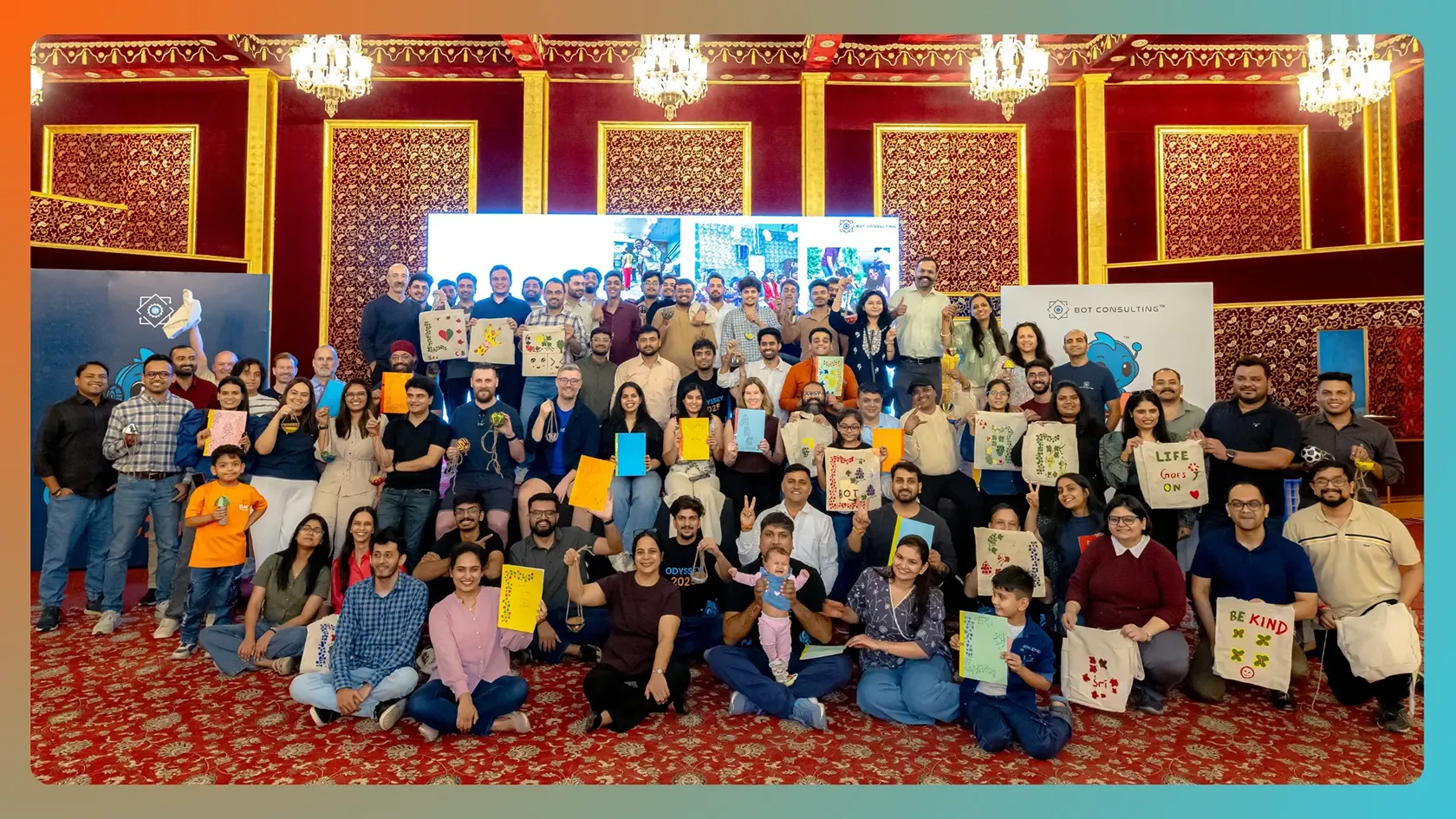
People often ask what a learning culture actually looks like. It doesn't begin with a course catalogue. It begins with everyday work.
Learning starts before delivery. Our onboarding isn't designed to explain just about policies. Rather, it's designed to reduce uncertainty and enhance impact, elevate experience. New joiners meet leaders early, understand why BOT exists, and explore our values through real decision-making scenarios. Context creates confidence long before technical proficiency does.
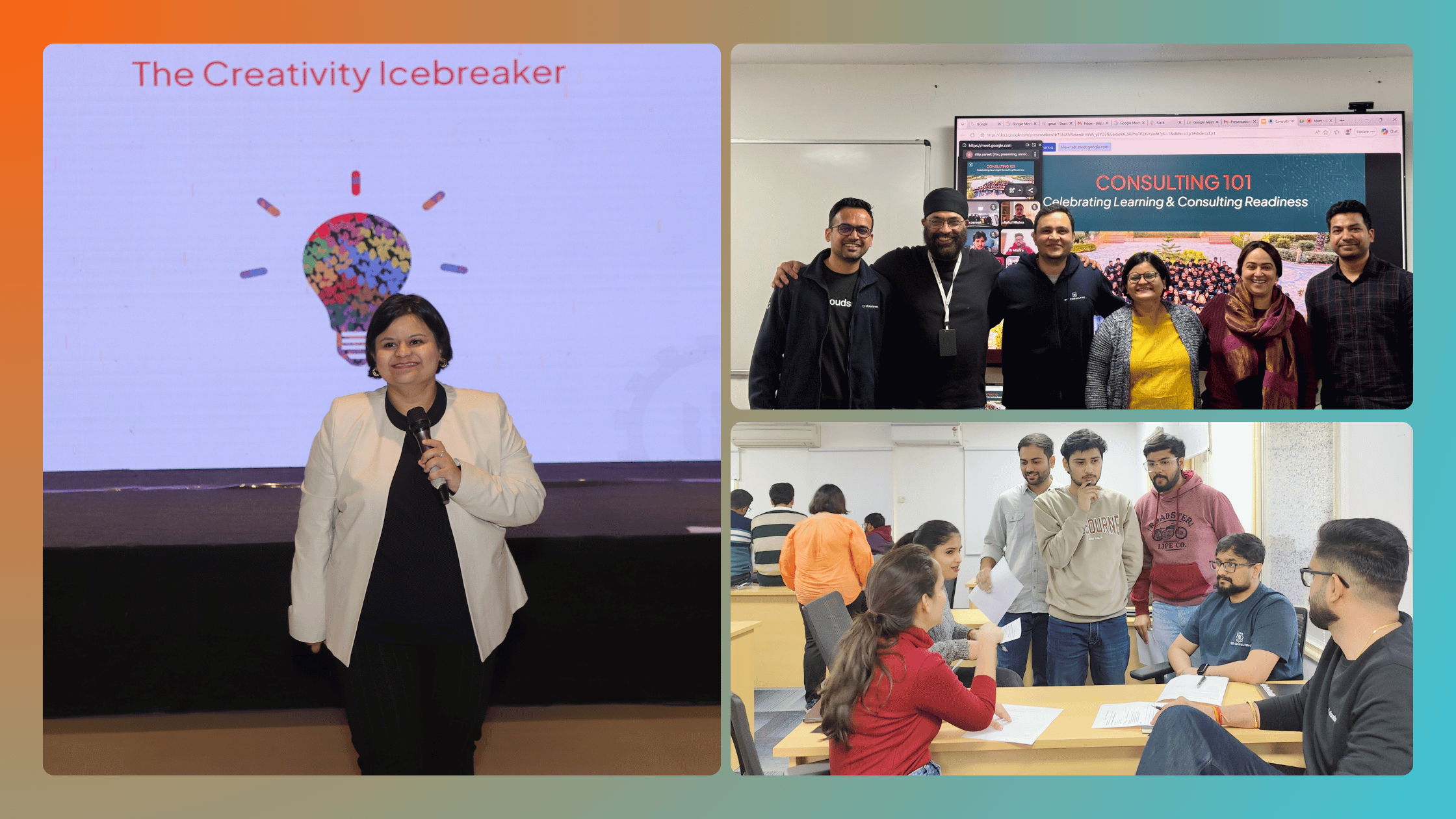
We teach consulting, not just technology. Technical excellence solves today's problem. Consulting excellence helps people discover whether they're solving the right problem in the first place. That's why Consulting 101 became one of the first flagship programs we designed. Participants don't simply learn communication frameworks - they navigate ambiguity, practice difficult conversations, work through client simulations, reflect, receive feedback, apply, and repeat.
One graduate, Himani Agarwal, captured the transformation perfectly: "Being a consultant means thinking like the client, not just like an engineer."
Another participant, Pankaj Phular, reflected that the biggest shift wasn't learning another framework - it was learning to focus on purpose and outcomes instead of task completion, and approaching ambiguity by structuring problems before attempting solutions.
Those aren't course outcomes. They're behavioural shifts and those are the outcomes that matter.
AI is changing what we teach. We don't believe AI reduces the importance of learning; we believe it raises the standard. Using AI isn't the difficult part anymore - knowing when not to trust it is. Our goal isn't to produce people who know prompts. Our goal is to produce professionals who combine AI with judgment, curiosity, and critical thinking. That is our “Human-in-the-loop” philosophy in action.
Learning Lives Inside Delivery
One lesson surprised me more than anything else: the best learning doesn't happen inside classrooms. It happens inside conversations.
That's why we stay closely connected to delivery teams. Every couple of weeks, we speak with GCC leaders and client partners and ask where people are struggling, what behaviours are improving, and where confidence gaps are emerging. Instead of waiting for quarterly surveys, we build continuous learning loops that turn feedback into action. Learning becomes part of delivery.
Why This Matters to Clients
Clients don't invest in GCCs simply to access talent. They invest to build capability.
A capability-first organization ramps people faster, creates consistency across teams, reduces delivery risk, builds leadership pipelines, and retains institutional knowledge. Most importantly, it earns trust, because every interaction reflects the same consulting mindset, not individual habits.
Why This Matters to the Person Sitting in the Chair
Ambitious professionals aren't picking employers based on the snack cabinet anymore. They're asking whether this job will make them better at something in five years than they are today.They're looking for their next version of themselves.
The most rewarding moments in my work aren't when a cohort graduates. They're when someone says, "I handled that client conversation differently because of something we practised." Or when a manager shares, "I've noticed more ownership, clearer communication, and greater confidence in the team." “How can I nominate more people in the next cohort?” - that is my favourite!
Those moments remind me that learning isn't measured by attendance. It's measured by changed behaviour.
Curious by Design
Curiosity doesn't survive on good intentions. It survives on leaders who show up, managers who coach, peers who challenge one another, and systems that encourage people to keep asking "why?"
As BOT grows, so does our ambition. We're now expanding into AI Enablement for our partners, building Consulting 201, strengthening GCC Leader onboarding, designing structured journeys for first-time managers, and creating learning experiences that evolve with our clients' businesses, not just with technology.
Because we believe the organizations that will thrive over the next decade won't simply be the ones with the best technology. They'll be the ones that learn faster than change itself.
That's what Curious by Design means to me: a culture where curiosity becomes a habit, capability becomes a competitive advantage, and learning becomes part of how work gets done - every single day.