Quick Summary
Key Takeaways
Snowflake Summit has been on my mind for weeks now.The conversations around data and AI are moving faster than ever, and this year’s Summit feels like one of those moments where you can actually sense the industry evolving in real time.
That’s what I’m most excited about being there, listening, learning, and seeing where this next phase of data engineering is headed. And it feels like we’re standing in the middle of a major shift in how data engineering teams will work over the next few years.
And I want to see that shift up close.
Why This Moment Feels Different
Over the last year, one thing has become impossible to ignore: AI is changing the speed of everything around data. Conversations that used to take months are now turning into prototypes in days. Workflows that were once manual are becoming intelligent. That pace is exciting.
But what excites me even more is that this is not just a technology shift. It is a mindset shift.
The role of data teams is changing quickly. It’s no longer only about building pipelines. Teams now need to think about AI, automation, and business impact together and that changes what modern engineering teams look like. That reshapes the role of the engineer. And it changes the kind of teams we need to build.
What We’re Building in Jaipur
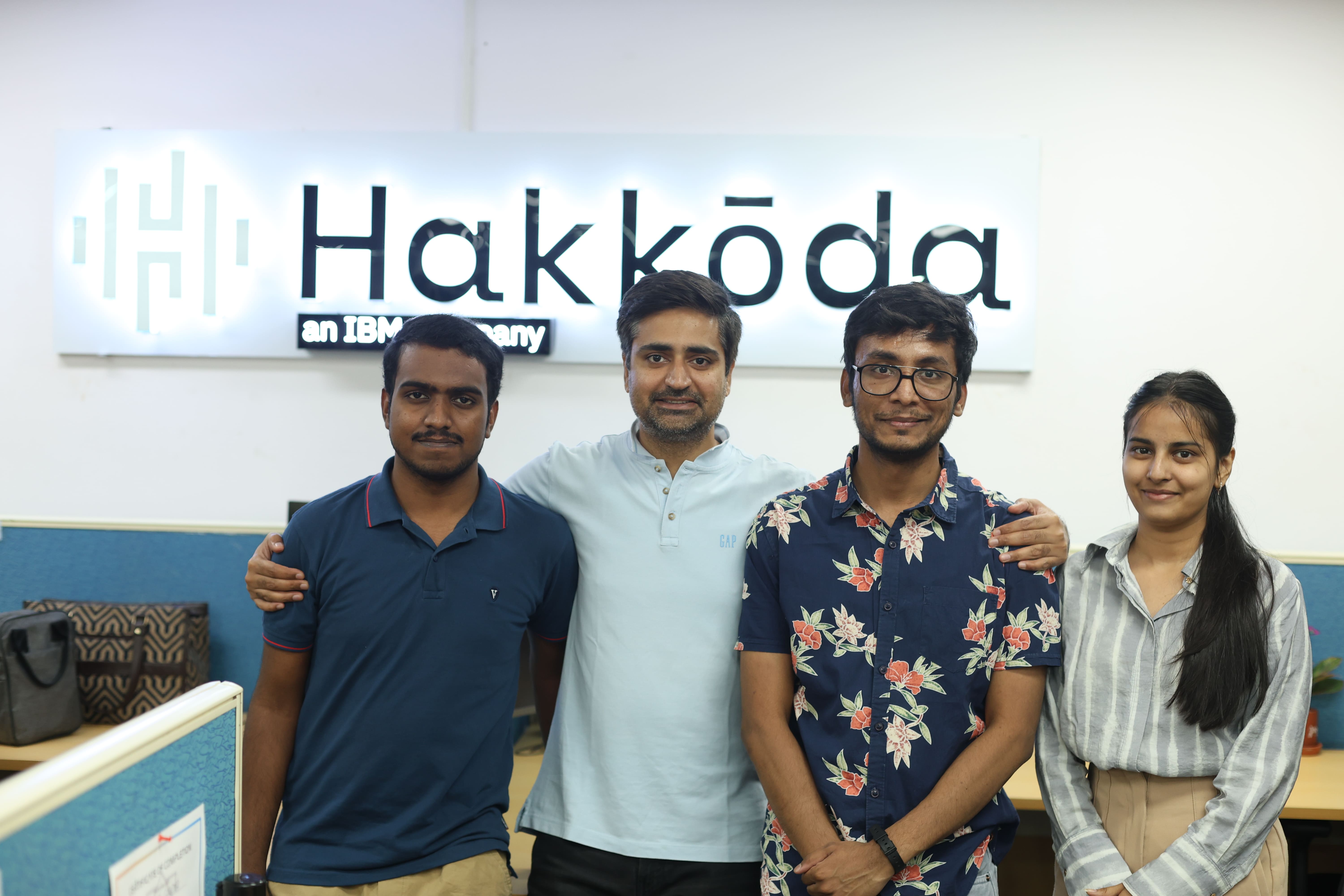
At BOT’s Snowflake Data and AI Labs in Jaipur, we’ve been actively building around these ideas. Our teams spends a lot of time experimenting, building, testing ideas, and figuring out how AI can simplify some of the most time-consuming parts of data work from modernization and migration to extraction, modelling, and orchestration. What makes the lab interesting is that it does not operate like a separate innovation corner. It is closely connected to real delivery.
The same people building accelerators are also involved in client engagements. That creates a very practical feedback loop. Ideas are tested against real problems. What works gets improved. What does not work gets rebuilt. And every engagement adds another layer of learning. That loop matters because AI cannot stay theoretical for long. It has to prove itself in real environments.
From Problems to Reusable Patterns
One of the most exciting parts of this journey is how quickly problems start becoming patterns. A migration challenge becomes a reusable accelerator. A reporting challenge becomes an AI-assisted workflow. A data extraction need becomes a framework. A client conversation becomes a new experiment. That is the kind of environment where learning compounds.
Inside the lab, we are exploring AI-assisted migration accelerators, data extraction frameworks, modelling copilots, MCP integrations, knowledge graphs, and Snowflake Cortex capabilities. Some of these ideas are still evolving. Some are already helping reduce manual effort and accelerate engineering workflows. But the bigger point is not the individual tool. The bigger point is the direction. We are moving toward a world where data engineering is more intelligent, more connected, and more adaptive.
The Data Engineer Is Changing Too
For me, this is probably the most important part. The role of a data engineer is changing rapidly. It is no longer enough to only understand pipelines, storage, and transformations. Engineers now need to understand how AI systems interact with data. They need to think about retrieval, context, orchestration, governance, and enterprise workflows together. The boundaries between Data Engineering, AI Engineering, and Platform Engineering are becoming smaller every quarter. That creates a huge opportunity for engineers who are curious, hands-on, and willing to learn fast. And that is exactly the kind of talent we want to develop.
For me, this is the real opportunity for building engineers who are curious enough to explore new tools, but smart enough to know how to apply them in real enterprise environments.
Why Snowflake Summit Matters
Snowflake Summit feels important to me this year for a very simple reason.
I want to see where the ecosystem is going, validate some of my own thinking, and have a few of those thoughts challenged too.
Every time I feel like I’ve understood this space a little better, it opens up another layer. Maybe that’s what makes all of this exciting in the first place.
All Geared Up
There’s a different kind of excitement before something I’ve been waiting for. I’m going in with questions, energy, and the belief that a few conversations there will stay with me long after the Summit ends.
For now, it just feels good to be “Staying Curious”.